

AI can't be accountable
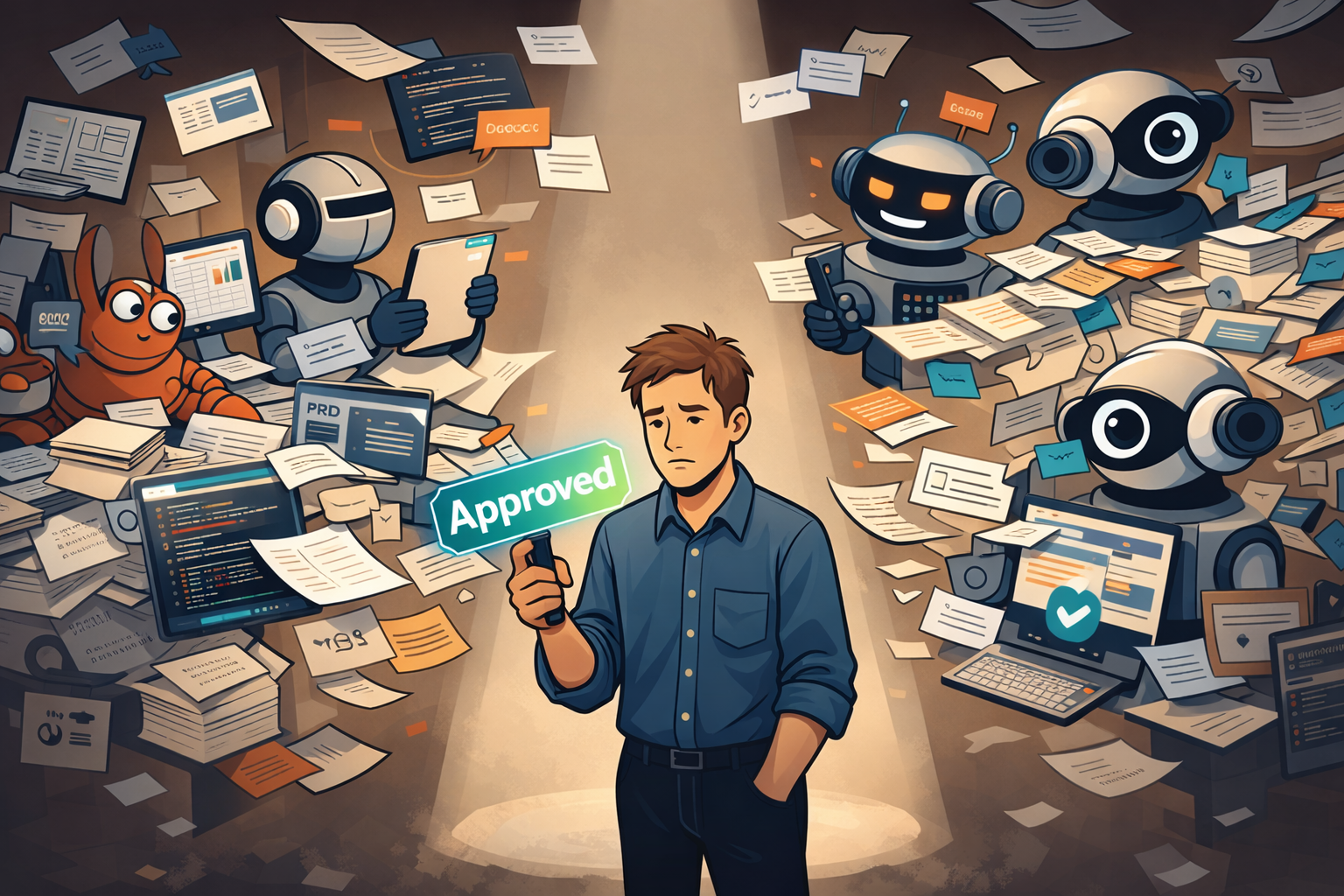
AI can write the docs, tickets, and code, but when gates get weaker something goes wrong, someone still has to own it.

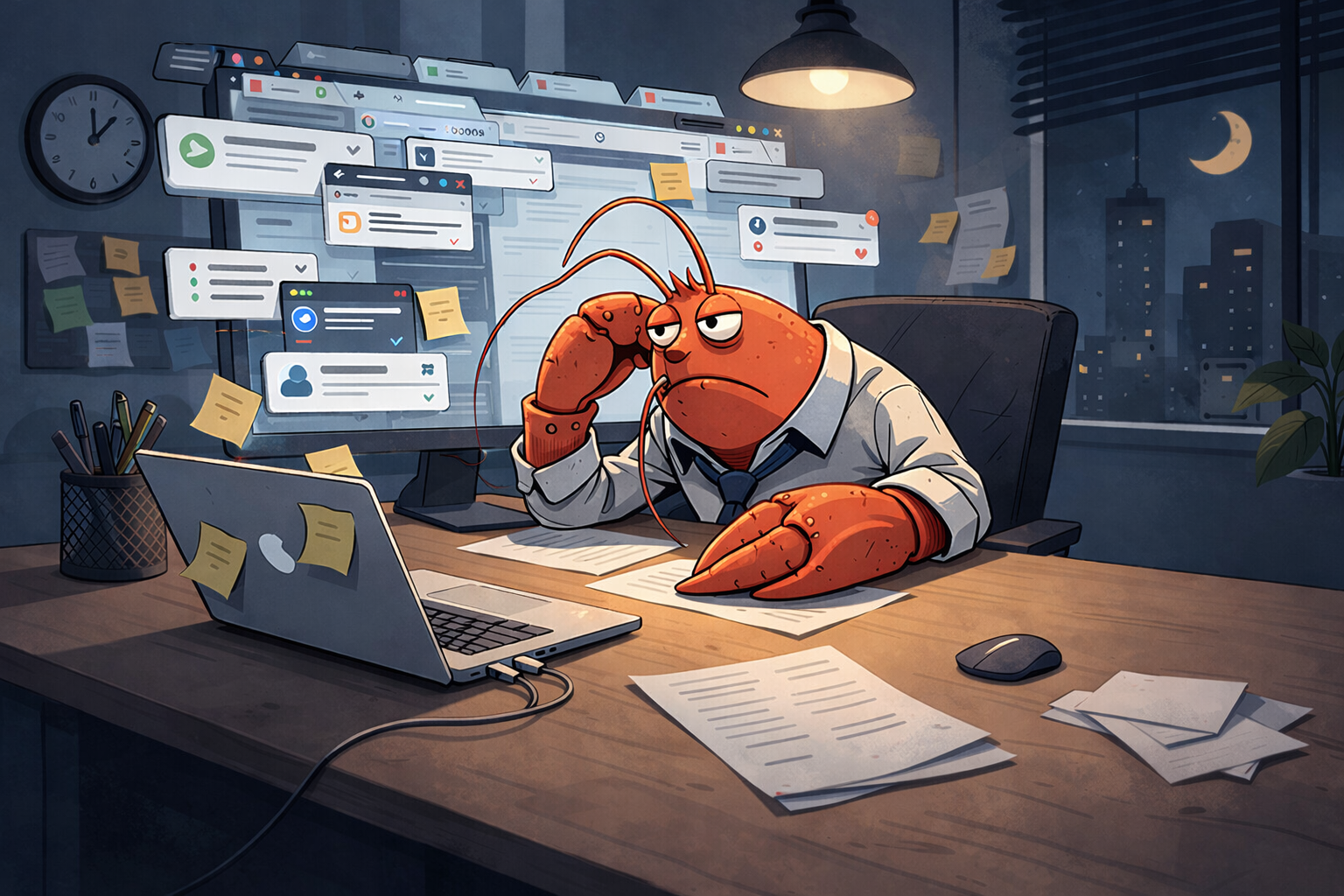
First of all, I’m a big fan of AI. It helps me work faster, make lunches from fridge leftovers, and generate tired lobster images for nonsense blog posts.
At the same time, I’m exhausted.
Is this me being an old man, yelling into the sky about AI because it’s changing my life? Maybe. But guess what - this is my wee space online, so I can.
But this isn’t intended as an AI shitpost, it’s just personal reflection.
There’s no doubt AI increases productivity. With a good prompt, AI can reward you with a working solution in just about any situation - and that’s pretty cool.
But it ain’t free! The subtle expectation becomes: “You have AI now, you should be faster.” And yes - in many cases, I am.
The problem is that the baseline has shifted. What used to feel like good output now feels average. What used to take a week now “should” take 1 day. The ceiling rises quietly, and so does the pressure.
And that’s just the operational side of it.
For me, coding used to feel calm. Headphones on, focus, hours gone. I still get that sometimes, but much less now. After five minutes, something pulls me away. It feels less like building and more like supervising, adjusting, and checking.
As mentioned above, AI can scaffold a full feature in one go. But I’m still far from pushing that straight to review. In FinTech, I need confidence in quality, security, and correctness. Compliance, reputation, partnerships, and money are on the line.
Coding got faster, but the responsibility is still there. And not only do I have to carefully review all of “my own” work, there’s the obligation to review the work of my team, who are also outputting faster!
For a side project, I go crazy, git commit -am "work" and we’ll see what happens. At work? Every line still needs to be understood, validated, and defendable.
People have always complained about context switching, but it feels worse now. If I’m waiting on a build, I jump to another task. Then another. Because AI helps me move faster, I feel guilty doing nothing.
That sounds productive, but it gets messy. I end up juggling four tickets across four projects. AI makes it easy to move fast, but also easy to split attention. That’s when mistakes can creep in.
There’s also a weird dopamine loop in this. You ship a feature fast, get a buzz, then chase the next one. AI makes that cycle even quicker.
The risk is you mistake speed for a good session. You keep going because it feels great in the moment, then crash later. More output, less recovery.
There’s also a team effect. If everyone speeds up, “normal” speeds up too. That means pressure spreads across planning, review, and delivery. So this can’t be solved by one person managing their time better. Teams have to set a sustainable pace on purpose.
I’ve never taken deployments lightly. My team sits on the critical path and issues directly translate into lost revenue. Sometimes I’ve taken a freakin’ build up to a deployment and genuinely had to take a few deep breaths. I’ll triple-check everything, review the PR for the 14th time, prepare the rollback page and ONLY THEN, press merge.
With AI, I’m releasing more often. More changes, more velocity, more surface area, and when something breaks, it’s slightly harder to pinpoint where the issue came from - because so much moved, so quickly. And again, it’s not just my changes - my team is putting out more stuff, so are other related teams.
None of this means AI is bad. It means rapid development has side effects. Productivity increases - but so does the surrounding load.
I’ve spent most of my adult life trying to become a better engineer. I always wanted to get better at it, because I never wanted to do anything else for a living. Since my window for becoming a professional wrestler has clearly come and gone, I don’t really have a backup plan.
And this situation isn’t entirely new. Tech has always evolved quickly. There were always new things to learn. We heard the same thing over and over: learn <insert trendy thing here> or get left behind. And because of that fear (and some ambition) I spent many evenings and weekends:
All of that investment felt like compounding interest. The more time I put in, the better I got and the more valuable I became. And then AI arrived.
It’s uncomfortable to admit, but AI changes the value of parts of that skill stack. Patterns that took years to learn now feel instantly accessible. Tools and framework knowledge are still useful, but less of a gate.
You know how many hour-long discussions I’ve had about whether something is an entity or a value object? I used to enjoy those debates. They felt like sharpening the craft. Will I ever have that again? Will I miss it? Who knows!
Deep down, I still believe experience matters. Judgement matters. Domain knowledge matters. Context matters. But the barrier to entry isn’t five years of education and continued learning over time anymore. It’s a 20 EUR subscription.
And if that internal shift isn’t enough, there’s also… the noise!
AI doesn’t disappear when I close the lid of my laptop, it’s absolutely everywhere. LinkedIn, X, podcasts, YouTube feed, my physio talks about it, my family talk about it, it’s everywhere.
It’s an unavoidable topic and it’s just exhausting. Every new tab I open I feel there’s something new:
Even when I’m not using it, I’m thinking about it.
It’s constant background noise, and I can’t switch my brain off. It’s not just a tool anymore. It feels like my whole environment has changed.
And underneath all of that noise, there’s a fear.
I’d be talking nonsense if I said I don’t fear becoming irrelevant at work. My career is a big part of my identity, as sad as that sounds. Most of my friends came through work. Moving country came through work. I spend a lot of free time learning to get better at work. So yeh, the fear is real.
Every third tab I open, I see some sort of headline about being wiped out by AI, and of course I’m not naive, I see the change, and I see how powerful this stuff is becoming. At the same time, it’s hard to face.
It’s not just a job - it’s security, identity, and passion, amongst other things.
I’m not opting out of using AI, I’m not looking for a new career, and I’m not chucking my laptop in the bin.
I’m just trying to figure out how to love this job in its new shape. I’m trying to stay ahead of a curve that changes every time I open a new tab.
For me, “good engineering” now means less emphasis on writing every line myself, and more focus on judgement. Clear problems, good constraints, careful review and safe delivery.
Maybe that’s not even AI fatigue, maybe this is just what major transition feels like!
AI can write the docs, tickets, and code, but when gates get weaker something goes wrong, someone still has to own it.
My opinions after building some features with OpenSpec, focusing on workflow and how it changes the way you work with AI.
My experience with SDD - specifically testing out SpecKit from GitHub and sharing my thoughts.